On September 14th the Bureau of Labor Statistics released data that showed the overall inflation rate jumped up by .4% to 1.9%. The BLS also released a CPI without the more volatile food and energy prices that only rose by .2% to a level of 1.7% higher than the same month last year. This data will be quite informative on the state of the U.S. economy and could have a major impact on the Fed's future decisions. The Fed has thus far been succeeding relatively well at its mandate of full employment but has generally not been doing as well at its job of price stability. The Fed aims for an inflation rate of 2.0% and has not hit such a benchmark since the April report. This data will be quite important as the Fed considers another rate hike this year and when it will begin selling off its balance sheet. Jim O’Sullivan of High Frequency Economics thinks that “The data help the case for following up the start of Fed balance sheet normalization next week with another rate hike in December, although there will be three more CPI reports before the December decision is made.” While this may be the case the Fed policymakers generally focus on an index based more off of personal consumption expenditures. Chairwoman Yellen has often stressed that one off factors like changing pharmaceutical prices and a drop in wireless data charges have kept this index down.
https://www.ft.com/content/b8b1d036-994d-11e7-a652-cde3f882dd7b
Saturday, September 16, 2017

Tuesday, September 12, 2017
Most Americans would hike taxes, tolls to pay for roads: Survey
Almost three quarters of Americans are
willing to pay increased taxes and tolls to fund road construction and other
transportation initiatives according to a survey taken by Missouri-based
engineering firm, HNTB Corp. This percentage of citizens increased to 84% in
agreement of increased taxes if such funds would be legally mandated towards
infrastructure. The reason this has not already been enacted is that taxpayers
fear their money is being diverted into other, lower-priority functions of the
federal and state government’s choosing. For example, when New Jersey had a gas
tax hike in order to compromise the sales tax cut, Governor Chris Christie had
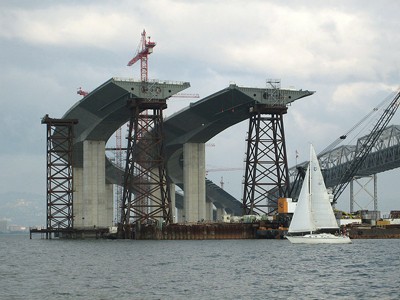
to stop construction projects due to a funds drought. The United States as a nation is
currently facing a large infrastructure backlog. The American Society of Civil
Engineers has projected the fall to be around $1.44 billion short for the next
decade of infrastructure spending. This begs the question of whether to seek a
private outsider partnership to help complete the necessary transportation
assets in the future. When President Donald Trump took office, he promised a $1
trillion infrastructure program. However, surveys following this revealed
nearly half of Americans lacked interest in paying higher taxes to fund it. The
willingness of paying these higher taxes is directly in result of a desire to
avoid road congestion and save travel time. This conflict in the public is
very obvious and it will be interesting to see what actions are taken.
Monday, September 11, 2017
US consumer borrowing increased in July
The Federal Reserve reported that overall consumer credit rose $18.5 billion in July, which is up from the $11.9 billion increase in July.This increase brought consumer credit to total of $3.75 trillion. However, increased loan demand is often a sign of continued economic growth and the gain suggests that the overall growth is back on track after a slow start. It will be interesting to see the affects on consumer credit after the impacts of the hurricanes are felt and people are beginning to rebuild.
The article also highlights that employers added 156,000 jobs in August and the unemployment rate ticked up to 4.4 percent. More jobs and more unemployment? This could mean that more people entered the labor force and are looking for jobs. Also in July, consumer pending rose by 0.3 percent which is the best spending since April.
https://apnews.com/36c36cf77d9840cfbec9210ad074eb64/US-consumer-borrowing-increased-in-July
Tesla's "Strange" Way of Helping Hurricane Victims
Throughout the evacuation process, specifically during Hurricane Irma in Florida, Tesla owners received a strange upgrade.
Tesla owners were surprised with an additional 40 miles to the total range of one charge. This was to help with evacuation efforts and take away the uncertainty of family plans. The additional miles were upgraded to the Tesla operating system through a remotely enabled free software upgrade. This free upgrade ends Saturday. As you may think, there were many different reactions to this strange update, here they are:
1. There is the Tesla customer who is weary of Teslas abilities to 'add' mileage to the battery, but did not care in the moment because they were given the 40 extra miles. This is a more than fair opinion considering most owners just wanted to evacuate to a safe area. One owner said, "“I was totally blown away. It was super awesome of them to do that,” Mr. Forman said of the software upgrade. “Tesla is always thinking outside the box.”
2. There were the Tesla owners, AND non Tesla owners who were distraught over this.. Some tweets that were referenced in the article read, "Hold up. Tesla is hiding the max battery range until we need it? That's messed up" Which is another valid argument, why is Tesla able to add 40 miles? Shouldn't they get those 40 miles regardless?
Most other manufacturers brag that they "sell vehicles that are incapable of learning and improving and are highly vulnerable to obsolescence,” Adam Jonas, an analyst at Morgan Stanley. This seems to be a point of emphasis for other car companies now that Tesla took part in this action.
I am very curious as to what this will do to consumers perspective of Tesla. Personally, I think people should admire the initiative, but also be able to hold back on upgrades if they so choose.
https://www.nytimes.com/2017/09/11/business/tesla-battery-irma-upgrade.html?rref=collection%2Fsectioncollection%2Fbusiness&action=click&contentCollection=business®ion=stream&module=stream_unit&version=latest&contentPlacement=3&pgtype=sectionfront
DACA ending will be a downside for republicans
https://www.reuters.com/article/us-usa-immigration-trump/republicans-could-lose-u-s-house-in-2018-over-immigration-fight-bannon-idUSKCN1BL14O
If congress does not act appropriately on the DACA and Dreamer issue republicans will be in for a loss. There is no real reason to attack these 800,000 immigrants right now. They are all working and contributing to our communities and our great country. Republicans will see many battles within themselves if they do not focus on greater issues and communicate effectively.
Bannon, a right-wing media executive who used to work for the Trump administration, warns republicans about this issue. If actions are not executed well, they could be in for a great disadvantage. Losing the house will make passing federal laws for Trump more difficult. For right now, I recommend for Trump if he wants to be productive to not focus on immigrants who are working and advancing our country but to instead use his power to fulfill his campaign promises. There is no insight if he will ever repeal Obamacare or implement the three trillion dollar infrastructure plan.
China announces to shut down local exchanges of Bitcoins
Another day, another crash and another Chinese ban. This time, as Reuters spotted, a single report from financial news site Caixin is saying that the Chinese government is considering banning cryptocurrency exchanges in China.
In particular, the report is saying that Chinese citizens won’t be able to use exchanges to buy bitcoins, ethers and more using Chinese yuan, and vice versa.
Cryptocurrencies aren’t banned per se, just exchanges. But do bitcoins have value in China if you can’t exchange them? That’s the main question and the reason why cryptocurrencies are crashing.
more on the link:
https://techcrunch.com/2017/09/08/bitcoin-price-drops-following-report-that-china-is-going-to-shut-down-local-exchanges/
Bitcoin is a cryptocurrency that can be obtained by solving an encrypted algorithm, and issue a limited amount of it. The algorithms become more difficult to solve as you earn more. It is the only currency that is free from manipulation and fabrication, unlike other currencies like Dollars, Yens, Yuans, Pounds, etc. China, where 90% of the exchanges of Bitcoins happen, announced to shut down the local trafficking. The local exchange rate went down to approximately 30% as of now. The bitcoin value reduced by 10%, which is below $4,200.
Some countries in the world are against the fact that the dollar is a world currency (and hence the US gaining quite a profit because of that). China is also one of them, but they banned bitcoin because of its flexibility and the decentralized system. Bitcoin is the only currency that cannot be manipulated in its values with the interests between nations. However, it seems that China is not fond of Bitcoin because they cannot really control it. As of now, the announcement of the Chinese government banning Bitcoin exchanges in the near future has reduced the value of the bullion. We will have to see how much more of an impact it may convey from now on, and even after China officially restricts the Bitcoin trade.
Sunday, September 10, 2017
Chinese Exports Grow Again
China’s exports increased 5.5% from a year earlier in August, according to customs data released Friday. Some economists said the pace, while lower than July’s 7.2% rise and the 6.0% forecast in a poll of economists, is steady enough to help prop up growth in the world’s second-largest economy. The rebound in exports this year was a contributing factor in lifting the Chinese economy to a stronger-than-expected performance for the first half of the year. While less important to China’s growth than a decade ago, trade still has an impact. For much of the past two years, lackluster global demand has dragged down China’s growth. The growth of exports is due to a recovery of global growth.The U.S., EU or Japan—external demand is still robust.So China can sell a lot of products which is cheap and fine.
https://www.wsj.com/articles/chinese-exports-grow-for-sixth-straight-month-1504843458
Texas ranchers may have lost tens of millions of dollars worth of cattle in Harvey
Hurricane Harvey devasted Texas. Texas is the nation's largest producer of cattle. One in four beef cows are in Texas. The Texas agriculture officials believe that they have lost millions of dollars in the cattle industry due to the aftermath of Harvey. Thousands of cows died during and after the storm. Before the storm Texas was home to 1.2 million cattle. The storm has not only wiped out a massive amount of cattle but as well as all of the ranches. Thus ranchers have lost their "product" and their place of operation. For a rancher, one can get insurance on their herd, but many don't because of the high price. If a rancher's whole herd drowned then they are out thousands of dollars. This puts a lot of cattle businesses or slaughterhouses in danger of taking a huge loss or even going bankrupt. Even though there's a extreme loss of supply now in the meat industry, economists don't expect a rise in meat prices, because the cattle on the east coast especially Texas are sent there to grow into adults then they are sent to the slaughterhouse. Thus inferring that there's enough cattle elsewhere in the U.S. not to effect the price.
I believe that the devastation of the ranches will cause many individuals financial stress and because there are so many people involved in one. It will effect the overall unemployment rate because it will take a while to have pastures grow back to be ready for the cattle to feed. There's going to be numerous people out of work until a ranch is fully functioning again. Also for ranchers that lost there whole herds they have to be able to front money in order to gain a new herd.
http://www.foxbusiness.com/markets/2017/09/08/texas-ranchers-may-have-lost-tens-millions-dollars-worth-cattle-in-harvey.html
Saudi Arabia's vague economic shift leaves huge oil IPO on track
On Saturday the Saudi government said that Saudi Aramco is still on track for its initial public offering planned for 2018. "The IPO process is well underway and Saudi Aramco remains focused on ensuring that all IPO-related requirements are completed on time and to the very highest standards," the Saudi information ministry said. The partial sale of Aramco is part of a massive shift in the Saudi economy, the reason for doing this is to reduce the dependency on oil and diversify the economy. The sale of Aramco is not the only thing that Saudi Arabia is doing to shift the economy. They have already cut some subsidies and announced new taxes which shows they are making progress towards their new economy.
I think Saudi Arabia is making the right decision by trying to diversify their economy. Right now their economy fluctuates based on oil prices. Oil prices have not recovered well enough for the kingdom and the economy is stagnant because of it. "The International Monetary Fund expects GDP growth at just 0.1% this year". If they sell part of Aramco and move towards the economy that they are planning on having, I think it will be very beneficial and the economy would be much more stable.
http://money.cnn.com/2017/09/10/investing/saudi-economy-revision-aramco-ipo/index.html?iid=SF_LN
http://money.cnn.com/2017/09/10/investing/saudi-economy-revision-aramco-ipo/index.html?iid=SF_LN
"Tesla triggers upgrade for cars in Irma's path"
This article is about a software update being offered by Tesla to car owners living in southern Florida trying to escape the hurricane. This update would allow their Tesla vehicle to drive an extra 40 miles before needing a recharge. This is great because Tesla is trying to help out their customers and people in general get to safety and away from Hurricane Irma. However, it is highlights an interesting point of, why wasn't Tesla always giving people the maximum driving range capability?
The answer lies in their ability and want for making more money. They are able to use software to restrict the batteries' range. They can sell this less-efficient battery at cheaper price point. With a cheaper price, they can increase their quantity demanded. Whenever they get a high paying customer, they can offer that customer the full range battery package at a premium. And make a little extra money.
Tesla is fully inclined to do what they want in terms of pricing and functionality. I think some customers may be ticked off if they now know that their battery isn't lasting to its fullest capability. Tesla can be charged at home or at one of many supercharging stations positioned in certain states across the country. Their battery is the car's fuel source. The ability to increase the batteries' range will be the driving goal of Tesla and other car manufacturers going into the future. It will be interesting to follow this story and see what it leads to.
http://money.cnn.com/2017/09/10/technology/tesla-battery-irma-florida-evacuation/index.html?iid=hp-stack-dom
Subscribe to:
Posts (Atom)